 by
by To be honest, before visiting Koh Samui, my expectations regarding transportation were simple: taxis, scooter rentals, and perhaps the occasional shared songthaew (pickup truck taxi)—nothing too complicated.
However, upon arrival, I discovered that the transport system wasn’t merely “simple”; it was structurally distinct. There are no subways, no dense bus networks, and no high-frequency transfer systems typical of major cities. Modes of transport are more decentralized and flexible, relying heavily on your own sense of pace.
After spending some time on the island, I came to realize that transportation here isn’t just a tool to facilitate travel—it is a core element that directly shapes the travel experience itself.
I. From Airport to Hotel: Entering an “Open-Air Mobility Environment”
When I arrived at Samui International Airport, my first impression was that it was completely different from a standard international airport.
The airport features an open-air design with many semi-outdoor areas; after disembarking, you step almost immediately into the tropical environment, free from complex indoor corridors or the typical “urban transition” feel. You quickly realize this isn’t a place demanding a rapid shift in mindset, but rather a gateway to the island that invites you to ease into the rhythm of the place.
Transportation options upon leaving the airport are straightforward: taxis, hotel transfers, or private car charters. I opted for a taxi. The journey from the airport to Chaweng Beach isn’t complex, yet the most striking sensation wasn’t the speed, but the shift in spatial atmosphere—roads opened up, buildings became lower, and coconut palms grew more plentiful. You get the distinct feeling of “entering an island” rather than “moving from an airport into a city.”
This leg of the journey represents the first layer of the Koh Samui transport experience: an emphasis not on efficiency, but on the sensation of arrival.
II. The Taxi Experience: A Fundamental Mode of Transport Based on Distance
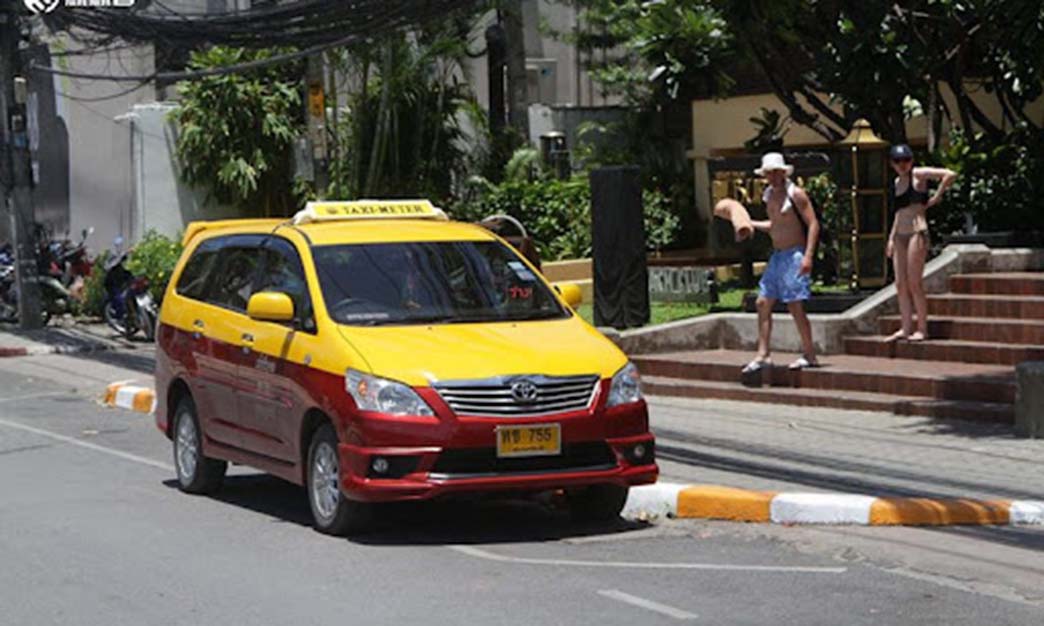
Taxis are among the most common ways to get around Koh Samui, though their operational logic differs from that of urban taxis.
The system is straightforward: fares are calculated based on distance with a clear structure, though drivers do not typically optimize routes for efficiency. They are convenient for short-distance trips—such as moving between areas like Chaweng, Lamai, and Bophut—but costs rise noticeably when traveling across different regions of the island. When moving between different areas, the most striking impression is that “each trip is a discrete event,” rather than the continuous flow of movement typical of a city. Drivers rarely make small talk; once the destination is confirmed, they simply set the GPS and go—the entire process is highly standardized.
I eventually came to realize that taxis on Koh Samui function more as “supplementary connectors”—bridging scattered locations—rather than components of a unified, integrated transit system.
III. Songthaews: The mode of public transport that best captures the island lifestyle
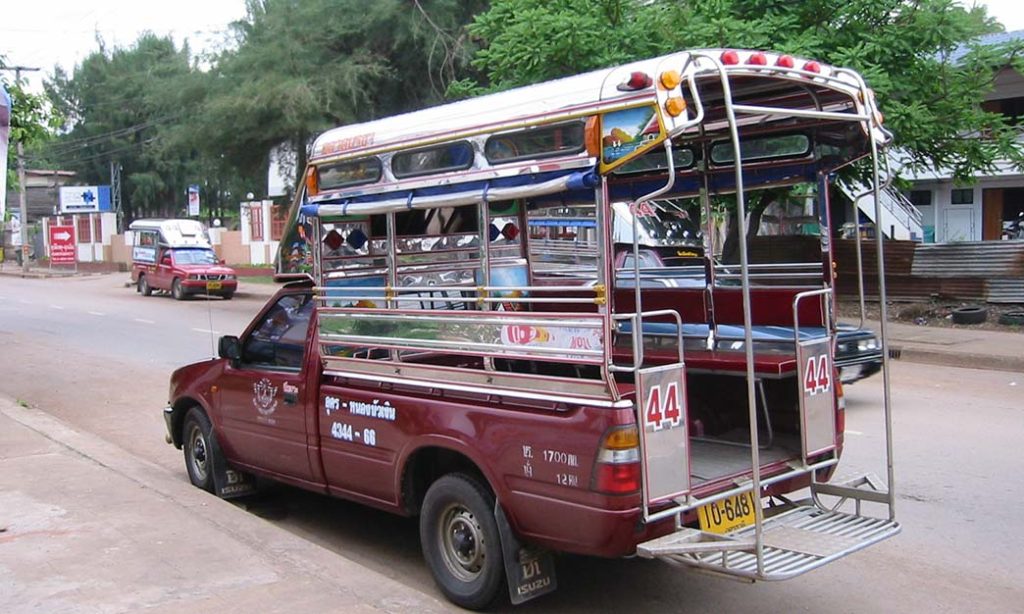
The Songthaew is a fascinating mode of transport on Koh Samui; essentially a modified pickup truck with bench seating in the back, it allows for shared rides among multiple passengers.
There are no strict stops; it operates more like a form of “semi-public transport” along the main roads. You can hail one from the roadside and hop on, or get off anywhere along the route.
The first time I took one, I was traveling from Chaweng to another beach area, sharing the ride with a mix of locals and tourists. The journey wasn’t fast, but it had a distinct sense of “fluidity.”
You aren’t moving within a rigid system; instead, you are being carried along an open route, sharing the journey with a variety of people. It is a unique experience—neither as fixed as a city bus nor as enclosed as a taxi, but something that occupies the space between the two.
This mode of transport gave me my first real insight into the underlying logic of Koh Samui: it is a “fluid island,” not a “structured city.”
IV. Motorbike Rental: Maximum freedom, but requiring self-discipline
Renting a motorbike is arguably the most popular choice for independent travelers on Koh Samui.
The rental process is simple, and many shops can arrange it on the spot. However, the experience shifts dramatically once you actually hit the road.
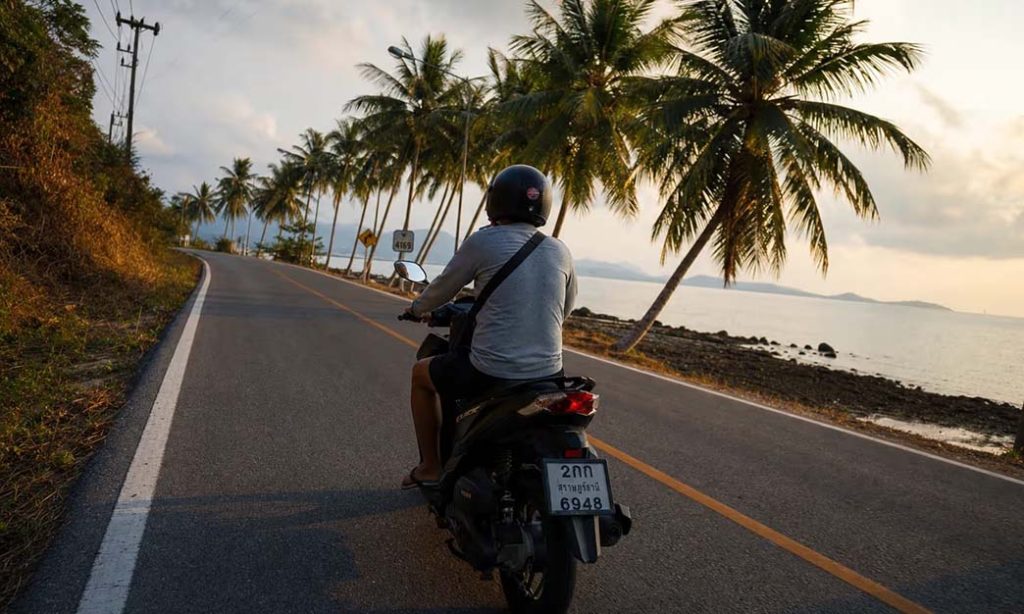
The most profound feeling is that “control is entirely in your own hands.” You can pull over by the beach whenever you like, turn onto a side road on a whim, or bypass the main thoroughfares to explore areas rarely visited by tourists.
The island’s road network isn’t overly complex, though it does feature distinct hilly sections and curves—particularly when traveling between beaches, where you encounter stretches of undulating terrain.
Consequently, the motorbike is more than just a recreational vehicle; it is a tool for “active exploration.” Once you get the hang of it, the experience is incredibly direct: you are no longer a passenger subject to the schedule of a transit system, but the one deciding your own path.
V. Road Structure: No Grid, Just a Ring-Road Logic
After spending some time on Koh Samui, I gradually realized that its traffic structure is actually quite simple, yet completely different from that of a city.
There is no grid-like road system here; instead, the island relies primarily on a main ring road that connects various beaches and districts, supplemented by mountain roads or secondary routes.
This leads to a noticeable phenomenon: distances that appear short on a map often take longer to cover in reality, as one must navigate detours or traverse hilly terrain.
For instance, traveling from Chaweng to Bophut, or from Lamai to certain viewpoints, involves significantly longer routes than the straight-line distance suggests.
This structure dictates a fundamental fact: on Koh Samui, “distance” is not a linear concept, but a “path-based” one.
VI. Nighttime Traffic: The Island Shifts to a Low-Frequency Mode
At night, the pace of traffic on Koh Samui slows down noticeably.
Taxis remain available but fewer in number; songthaews (shared pickup trucks) become scarce; and while motorcycles remain the dominant mode of transport, the roads generally become very quiet.
I once returned to my hotel from Fisherman’s Village at night; there was almost no traffic on the road—only the glow of streetlights and the scattered lights from shops.
It didn’t feel like the end of a city night, but rather like the entire island settling into a state of rest, with movement itself becoming more restrained.
The Essence of Koh Samui’s Transport—”Freedom Without Centralization”
Reflecting on my overall experience with transportation on Koh Samui, my strongest impression isn’t whether it was “convenient” or “inconvenient,” but rather how it fundamentally changed my understanding of mobility.
There is no unified center and no forced route; every mode of transport is valid, yet none is complete on its own.
Taxis handle point-to-point connections, songthaews provide a fluid local experience, motorcycles enable free exploration, and the roads supply the structural framework.
Together, they form a truly unique mobility system.
For me, the most significant takeaway was this:
On Koh Samui, transportation is not merely a system—it is the way you immerse yourself in the island’s rhythm of life.