 by
by To be honest, before visiting Jeju Island, my expectations regarding its food were neither complex nor particularly specific. I simply envisioned seafood, grilled meat, and standard Korean dishes—all defined by the concept of “freshness.”
However, upon arrival, I discovered that Jeju’s cuisine doesn’t win through complexity; instead, it triumphs through something far more direct: the inherent quality of the ingredients and an experience deeply intertwined with the island environment.
The food here isn’t about elaborate presentation; it feels like an organic part of island life rather than a standalone “culinary system.”
I. Jeju Black Pork: The Quintessential “Taste of the Island”
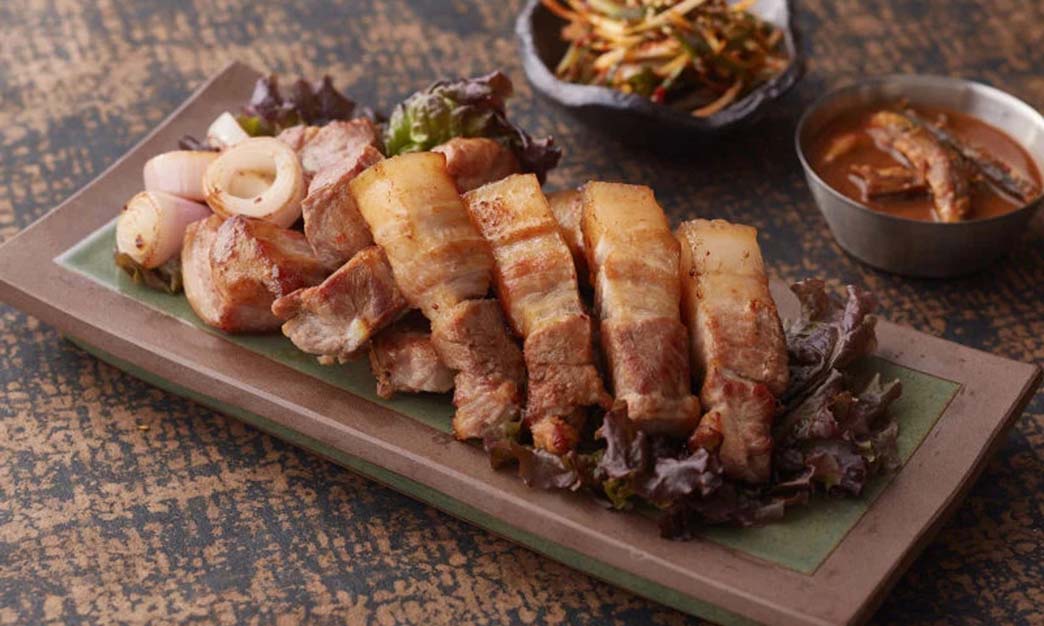
My first proper meal on Jeju Island was Jeju Black Pork.
Restaurants typically use charcoal grills, with an iron plate or grill set in the center of the table where the meat is cooked slowly. The meat arrives with minimal pre-treatment, but as the fat renders out, a rich, enticing aroma fills the air.
Compared to ordinary pork, Jeju Black Pork has a firmer texture—yet it isn’t tough; rather, it offers a satisfyingly “substantial” mouthfeel. While the grilling process releases a distinct, savory aroma of fat, the taste never feels greasy or cloying.
I remember sitting in a local restaurant surrounded mostly by residents; the atmosphere was filled with the natural, low hum of conversation. Wrapping the grilled meat in lettuce leaves with a bit of kimchi created a combination that was simple yet deeply satisfying.
That meal made me realize for the first time that Jeju’s “signature food” isn’t fine dining, but rather honest, straightforward food that reflects the local way of life.
II. The “Sea-to-Table” Experience: A Short Journey from Shore to Plate
Seafood plays a prominent role in Jeju’s culinary scene, often presented in a very direct, unadorned manner.
At Dongmun Market and various coastal areas, I encountered many stalls serving seafood caught and prepared right on the spot. Ingredients like scallops, octopus, and abalone were often processed and cooked immediately in front of customers.
I once watched a seaside stall grill scallops directly on an iron plate; there was no complex seasoning—just a simple touch of sauce to enhance the flavor. The process was quick, yet the flavor was incredibly distinct.
This experience differs vastly from seafood restaurants in the city; it feels much closer to the ingredients in their natural state.
You don’t feel as though you’re eating a complex, processed dish; instead, it’s as if a piece of the ocean has been served directly to you.
III. Haenyeo Cuisine: A Way of Eating in Harmony with the Sea
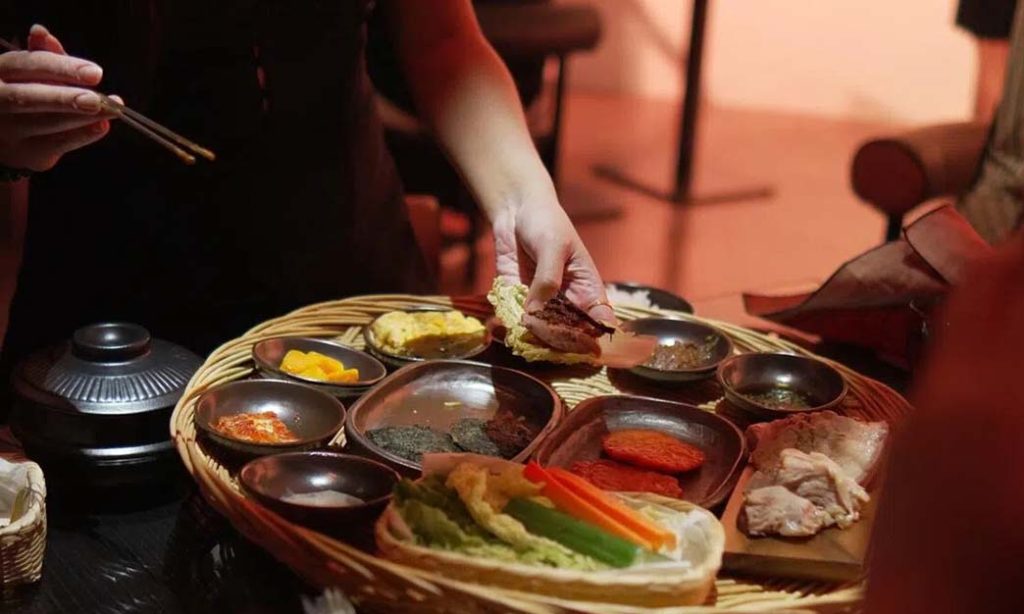
A unique aspect of Jeju Island is its “Haenyeo” culture—traditional female divers who harvest seafood.
I’ve enjoyed dishes featuring their catch—such as sea snails, sea urchin, and octopus—at various coastal restaurants.
The preparation is usually very simple, retaining a somewhat “pristine” or “raw” quality.
What’s most interesting is how easily you can visualize the harvesting process while eating: this isn’t the result of industrial production, but of a direct interaction between humans and the sea.
This context transforms the meaning of the food; it’s not just about tasting good—it’s about feeling a connection to the source.
IV. Dongmun Market: The Hub of Jeju’s Everyday Food Culture
Dongmun Market was one of the places where I spent a significant amount of time on Jeju Island.
It isn’t merely a tourist market; it’s a space where local life and tourism blend together.
The market is filled with stalls offering prepared foods, fresh seafood, snacks, and traditional delicacies. The atmosphere is lively without feeling overly commercialized.
What struck me most was the casual, “grab-and-go” vibe: people didn’t necessarily sit down for a formal meal but instead wandered from stall to stall.
This style of eating actually mirrors the overall pace of life on Jeju Island—uncomplicated, yet steady and enduring.
V. Black Pork Soup with Rice (Gomtang): A Gentle, Comforting Flavor
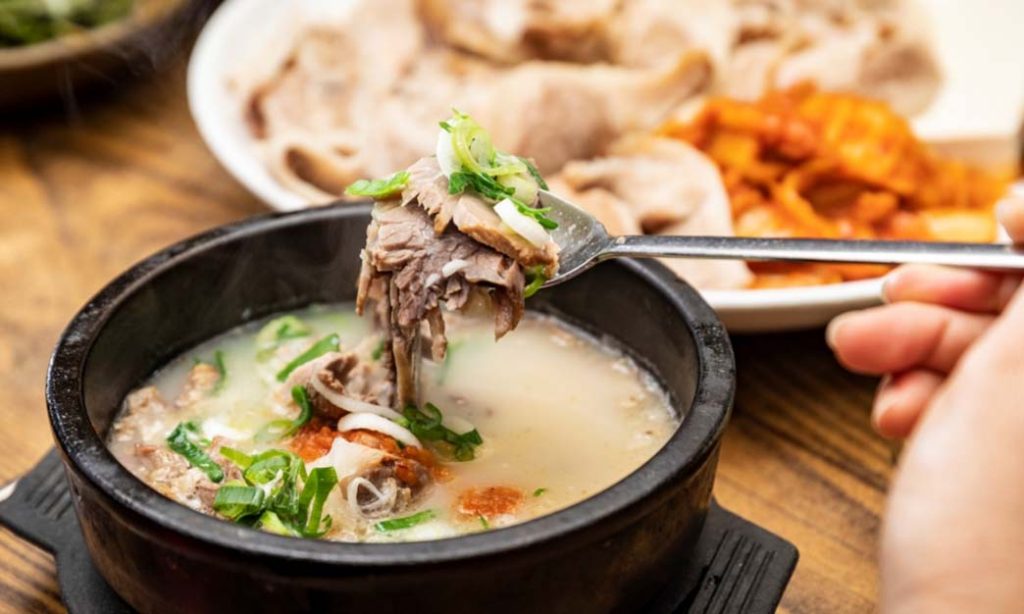
In addition to grilled pork, I also tried the black pork soup with rice.
This dish is characterized by its simplicity: a clear or slightly milky broth containing rice and slices of pork.
It tastes gentle and mild—free from harsh or overpowering flavors—yet it gradually instills a sense of comfort and stability.
Eating this at night offers a distinct sense of relaxation.
It lacks the intense impact of heavily seasoned dishes, but it fits perfectly with the slow-paced environment of Jeju Island.
VI. Coffee and the Coastline: An Experience Where Food and Scenery Are Linked
A distinctive feature of Jeju Island is that its coffee shops are almost invariably linked to the coastline or natural landscapes.
I once sat in a café along the Aewol coast with the sea right outside the window.
Ordering a coffee and watching the ever-changing waves transforms the moment; it becomes more than just “drinking coffee”—it becomes an experience of simply dwelling in a space.
Here, the food and the scenery are experienced simultaneously.
VII. Desserts and Light Bites: Pacing the Journey
The desserts and light bites on Jeju Island are relatively simple—think cream buns, cakes, and ice cream.
While not overly elaborate, they play a crucial role in the journey: pacing the experience.
After a walk along the coast or a hike up a volcanic cone, enjoying a dessert offers a welcome sense of pause and relaxation.
This “presence” of light bites is actually significant on Jeju Island, given the naturally open and expansive environment.
Jeju Island’s Cuisine Is “Direct,” Not “Complex”
Reflecting on the culinary experience of Jeju Island, my main takeaway is that the food here does not strive for complexity; instead, it seeks to preserve the ingredients’ natural state.
For me, the most important realization from this trip was that “deliciousness” is not merely about flavor—it is an experience created through the interplay between food and the environment. Jeju Island is the perfect place where food and the natural landscape are inextricably linked.